 Wildlife
of Sulawesi
Band-bellied Crake
Avibase Complete Checklist Additions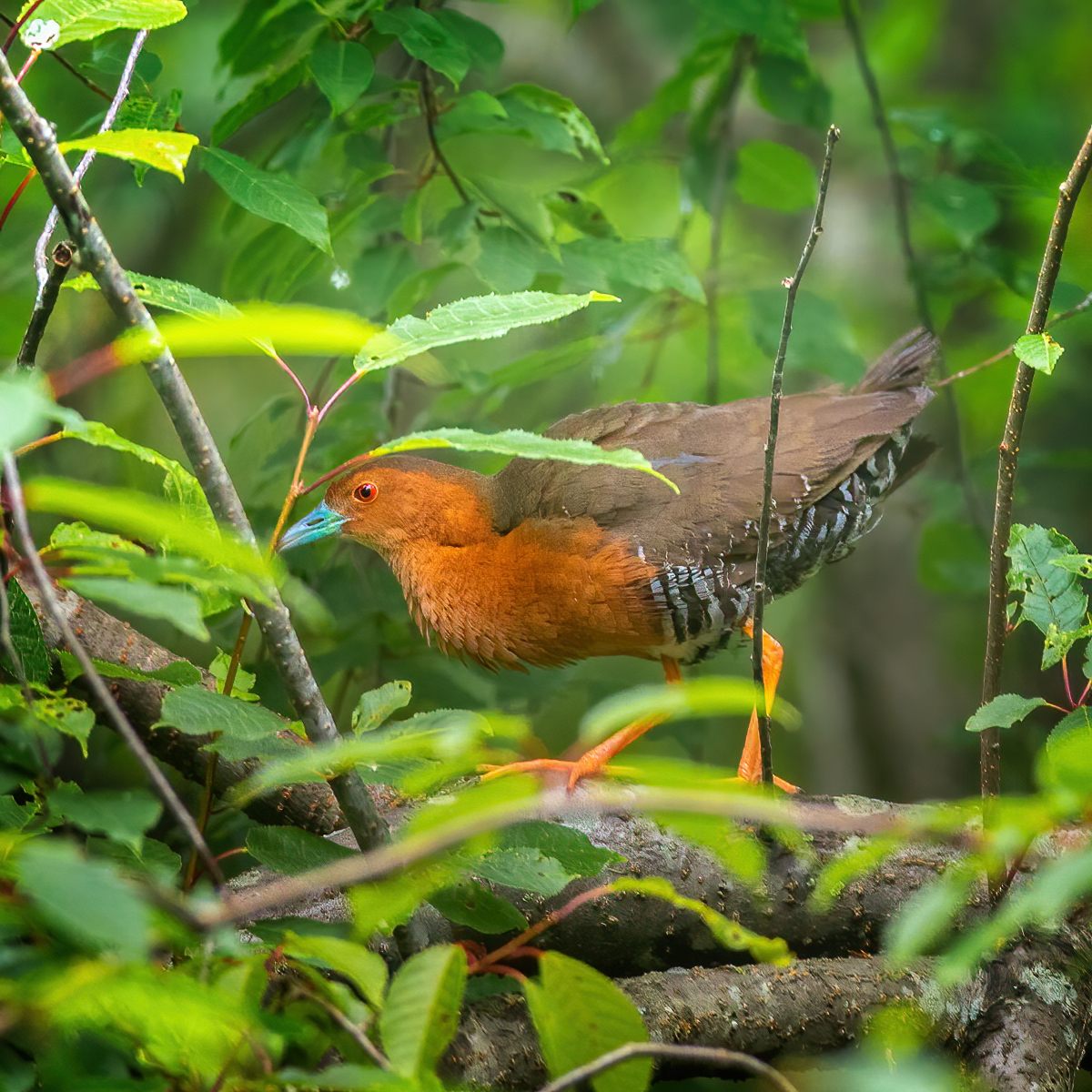
Photo: egorbirder · CC BY 4.0 (May be cropped or resized)
Zapornia paykullii
Basic stats
Diet
Aquatic invertebrates, worms, small crustaceans, seeds and soft plant material
Habitat
Wet grass, rice fields, marshes and other densely vegetated shallow wetlands
Range
Breeds in northeastern Asia; winters in Southeast Asia
Size
20–22cm
The band-bellied crake is a small rail, approximately 20–22 cm long, with ashy-brown upperparts, a warm orange-rufous face, neck and breast, and bold black-and-white barring across the flanks and undertail. The throat is whitish and the compact body is carried on sturdy legs suited to wet ground. Sven Ingemar Ljungh named it in 1813 for the Swedish naturalist Gustaf von Paykull (Myers field guide extract; Wikipedia general species account).
It breeds in Manchuria, eastern China and northern Korea, then moves south through Asia to winter. Regular habitat includes wet grass, rice fields, grassy hummocks, meadows and swamps with dense cover. It feeds by picking and probing for aquatic insects and larvae, worms and small crustaceans, while also taking seeds and soft plant matter. Sulawesi records would concern a non-breeding migrant rather than a resident population, and the opened sources provide no reliable clutch or incubation figures (Indian Birds 2025; regional field-guide account).
Quick answers
- What does the Band-bellied Crake eat?
- Aquatic invertebrates, worms, small crustaceans, seeds and soft plant material
- What habitat does the Band-bellied Crake live in?
- Wet grass, rice fields, marshes and other densely vegetated shallow wetlands
- Where is the Band-bellied Crake found?
- Breeds in northeastern Asia; winters in Southeast Asia
- How big is the Band-bellied Crake?
- 20–22cm