 Wildlife
of Sulawesi
Red Knot
Avibase Complete Checklist Additions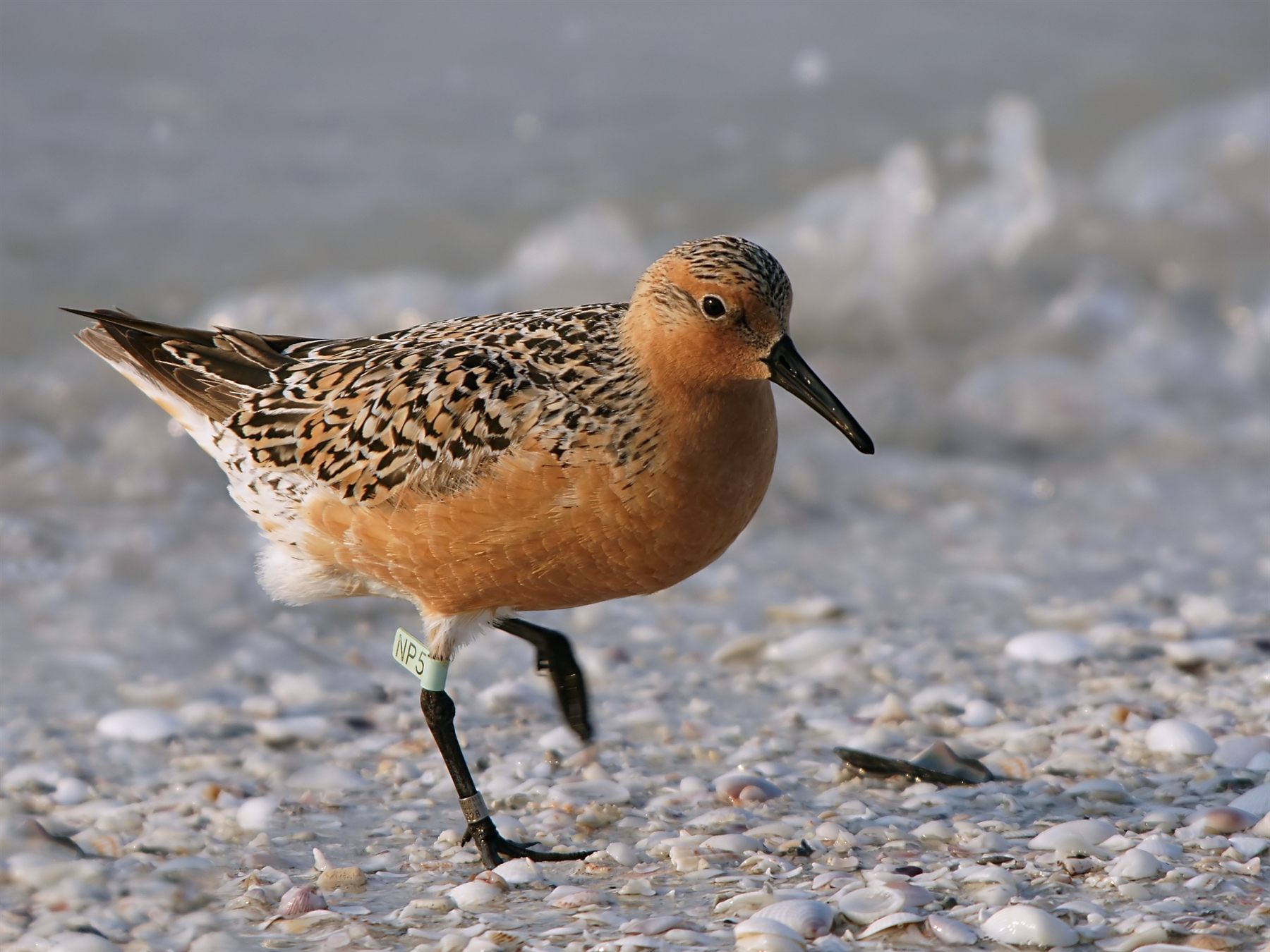
Photo: Hans Hillewaert · CC BY-SA 4.0 (May be cropped or resized)
Calidris canutus
Red Knot is a medium-sized shorebird that breeds on tundra in the far north of Canada, Europe and Russia, with six recognised subspecies. Its body shape is typical for the genus, with a small head and eyes, a short neck and a slightly tapering bill no longer than its head. Notable features include one of the longest migrations of any landbird, and some birds of one subspecies travel more than 14,000 km each way between the Arctic and the southern tip of South America (Wikipedia, general species account). (Wikipedia, general species account).
Its diet changes with the season: arthropods and larvae are preferred on the breeding grounds and hard-shelled molluscs at other feeding sites. arthropods and larvae are the preferred food items at the breeding grounds. A 2004 study found that the genus was polyphyletic and that the closest relative of the two knot species is the surfbird (Calidris virgata). In the breeding season, the red knot has a circumpolar distribution in the high Arctic, then migrates to coasts around the world to winter at latitudes between 60° N (Shetland) to 55° S (Tierra del Fuego). (Wikipedia, general species account).