 Wildlife
of Sulawesi
Great-billed Parrot
Avibase Complete Checklist Additions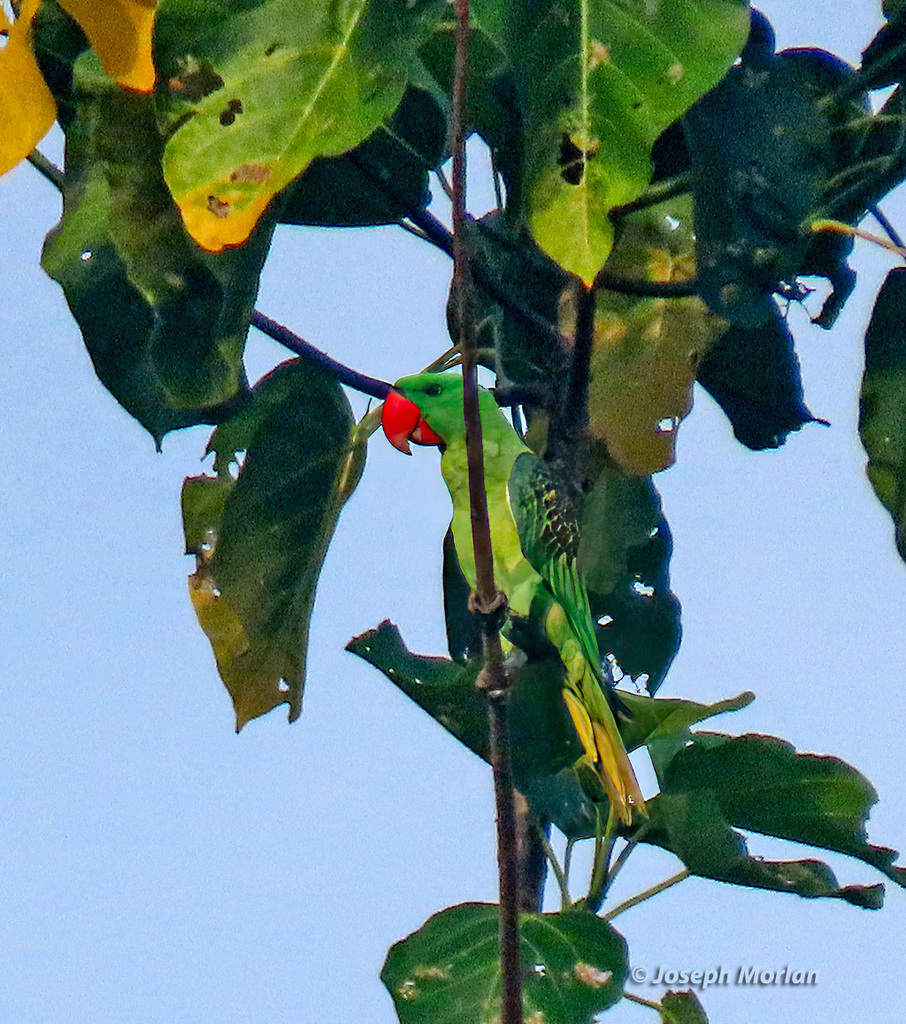
Photo: (c) Joseph Morlan, some rights reserved (CC BY-SA) · CC BY-SA (May be cropped or resized)
Tanygnathus megalorynchos
The female is typically smaller than the male. The great-billed parrot was described by the French polymath Georges-Louis Leclerc, Comte de Buffon in 1780 in his Histoire Naturelle des Oiseaux from a specimen collected in New Guinea. The bird was also illustrated in a hand-coloured plate engraved by François-Nicolas Martinet in the Planches Enluminées D'Histoire Naturelle which was produced under the supervision of Edme-Louis Daubenton to accompany Buffon's text. (Wikipedia, general species account).
The great-billed parrot (Tanygnathus megalorynchos) also known as Moluccan parrot or island parrot, is a medium-sized, approximately 38 cm long, green parrot with a massive red bill, cream iris, blackish shoulders, olive green back, pale blue rump and yellowish green underparts. The species is found in forest, woodland and mangrove in the south-east Asian islands of Maluku, Raja Ampat, Talaud, Sangir, Sarangani, the Lesser Sundas, and nearby small islands. (Wikipedia, general species account).