 Wildlife
of Sulawesi
Moluccan Starling
Avibase Complete Checklist Additions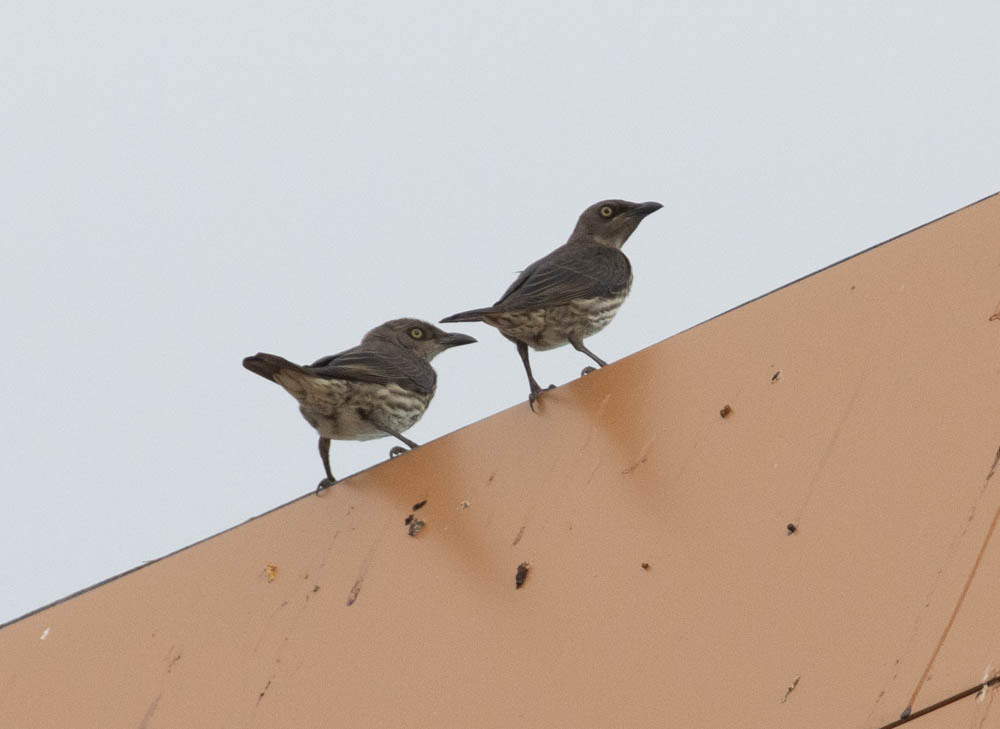
Photo: (c) avocat, some rights reserved (CC BY) · CC BY (May be cropped or resized)
Aplonis mysolensis
Basic stats
Diet
Fruit; insects and nectar also reported
Habitat
Lowland, coastal and hill forest, mangroves, scrub and settled areas with large trees
Range
Northern Moluccas, Banggai and Sula islands, eastern Sulawesi and western Papuan islands
Size
About 20cm
The Moluccan starling is about 20 cm long, with a fairly long graduated tail. Adults are mostly black with green and purple gloss, duller wings and tail, bristly forehead feathers and pointed feathers on the neck and throat; the eye is brown and the bill and legs are black. The sexes look alike. Juveniles have a shorter tail, chocolate-brown upperparts and strong streaking below (BirdForum account citing Handbook of the Birds of the World).
Across its range it uses lowland, coastal and hill forest, mangroves, degraded woodland, scrub, cultivation and settlements that retain large trees. Fruit is documented, including an adult regurgitating fruit to a chick; insects and nectar are also reported. Birds usually occur in flocks and may associate with metallic starlings. Nesting can be colonial, with reports of colonies exceeding fifty pairs, but the opened account did not provide clutch or incubation values (BirdForum general account; Macaulay Library record).
Quick answers
- What does the Moluccan Starling eat?
- Fruit; insects and nectar also reported
- What habitat does the Moluccan Starling live in?
- Lowland, coastal and hill forest, mangroves, scrub and settled areas with large trees
- Where is the Moluccan Starling found?
- Northern Moluccas, Banggai and Sula islands, eastern Sulawesi and western Papuan islands
- How big is the Moluccan Starling?
- About 20cm