
 Wildlife
of Sulawesi
White-Browed Crake
Verified Shared Species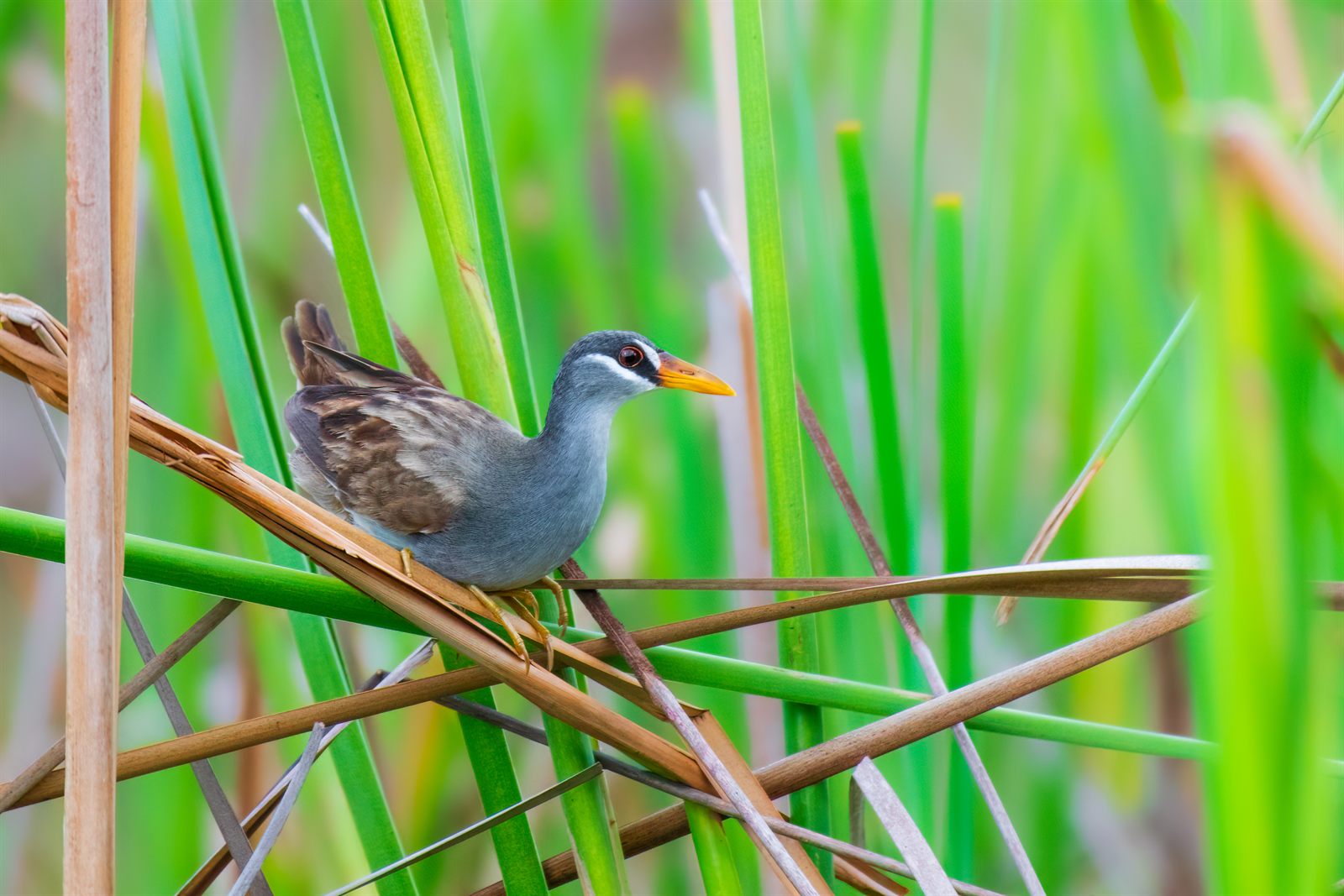
Photo: Domzjuniorwildlife · CC BY-SA 4.0 (May be cropped or resized)
Poliolimnas cinereus
Basic stats
Diet
Aquatic invertebrates, frog spawn, small fish, seeds and aquatic leaves
Habitat
Well-vegetated freshwater wetlands and mangroves
Range
Southeast Asia to New Guinea, northern Australia and Pacific islands
Clutch size
Usually about 4 eggs
Incubation period
About 18 days
Size
19–21.5cm
The white-browed crake is a compact 19–21.5 cm rail with a black eye area bordered above and below by broad white streaks. Adults have a grey crown and nape, white underparts, grey upper flanks, browner lower flanks, brown back and wings, an orange bill and yellow legs. Juveniles are browner overall, with less distinct facial markings, a dull yellow bill and dull green legs (Bird Society of Singapore species account).
Its broad range extends from Southeast Asia to New Guinea, northern Australia and many Pacific islands. Birds use well-vegetated freshwater wetlands and mangroves, foraging on floating plants, mud and water margins, especially early and late in the day. Food includes worms, slugs, leeches, insects, water spiders, frog spawn, small fish, aquatic seeds and leaves. Both adults incubate a typical four-egg clutch for about 18 days in a lined plant platform, sometimes covered by woven vegetation (BirdForum account citing Birds of the World).
Quick answers
- What does the White-Browed Crake eat?
- Aquatic invertebrates, frog spawn, small fish, seeds and aquatic leaves
- What habitat does the White-Browed Crake live in?
- Well-vegetated freshwater wetlands and mangroves
- Where is the White-Browed Crake found?
- Southeast Asia to New Guinea, northern Australia and Pacific islands
- How many eggs does the White-Browed Crake lay?
- Usually about 4 eggs
- How long are the eggs of the White-Browed Crake incubated?
- About 18 days
- How big is the White-Browed Crake?
- 19–21.5cm