 Wildlife
of Sulawesi
Paradise Flying Snake
Reptile Database Snake Checklist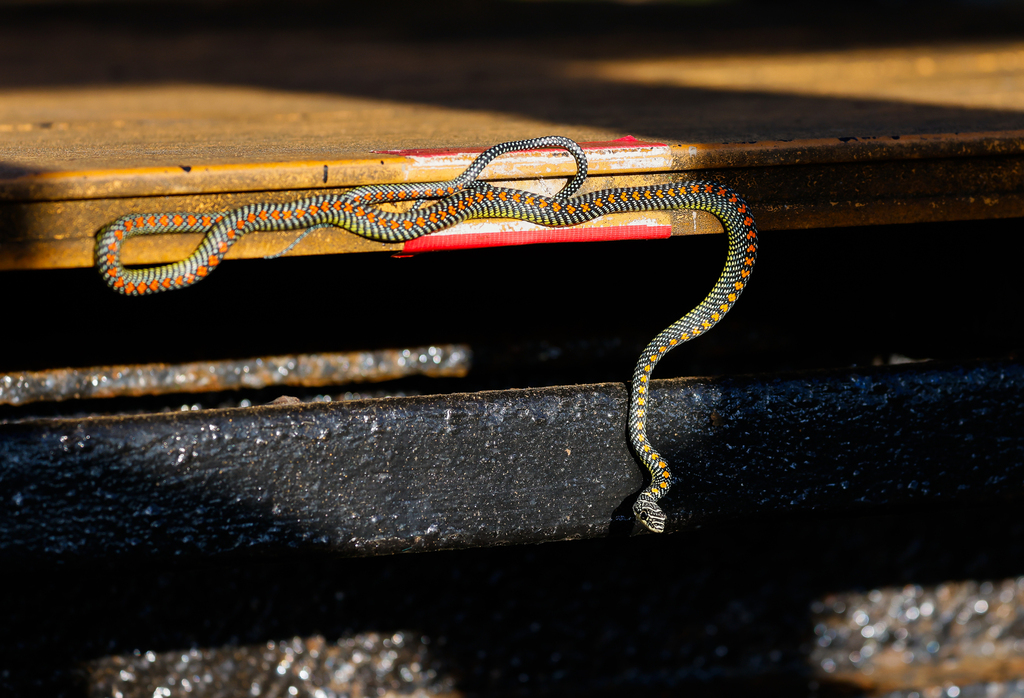
Photo: (c) Thomas Galewski, some rights reserved (CC BY) · CC BY (May be cropped or resized)
Chrysopelea paradisi
Like all species of its genus Chrysopelea it can glide by stretching the body into a flattened strip using its ribs. It can, like all species of its genus Chrysopelea, glide by stretching the body into a flattened strip using its ribs. Slow motion photography shows an undulation of the snake's body in flight while the head remains relatively stable, suggesting controlled flight. The species name paradisi comes from either the Latin "paradisus" or Greek "paradeisos", which means park. (Wikipedia, general species account).
The species occupies forests and is fully arboreal, and glides between trees. Similar to some other colubrid snakes, flying snakes possess enlarged posterior maxillary teeth, produce venom from Duvernoy's glands, and are believed to be mildly venomous. Because this snake is uncommon, arboreal, and prefers forests, encounters with humans are rare. However, in 2013 there was a report of a 45-year-old woman who was bitten on her right thumb by a snake hanging to the window grill when she was trying to close the windowpanes of her bedroom. (Wikipedia, general species account).